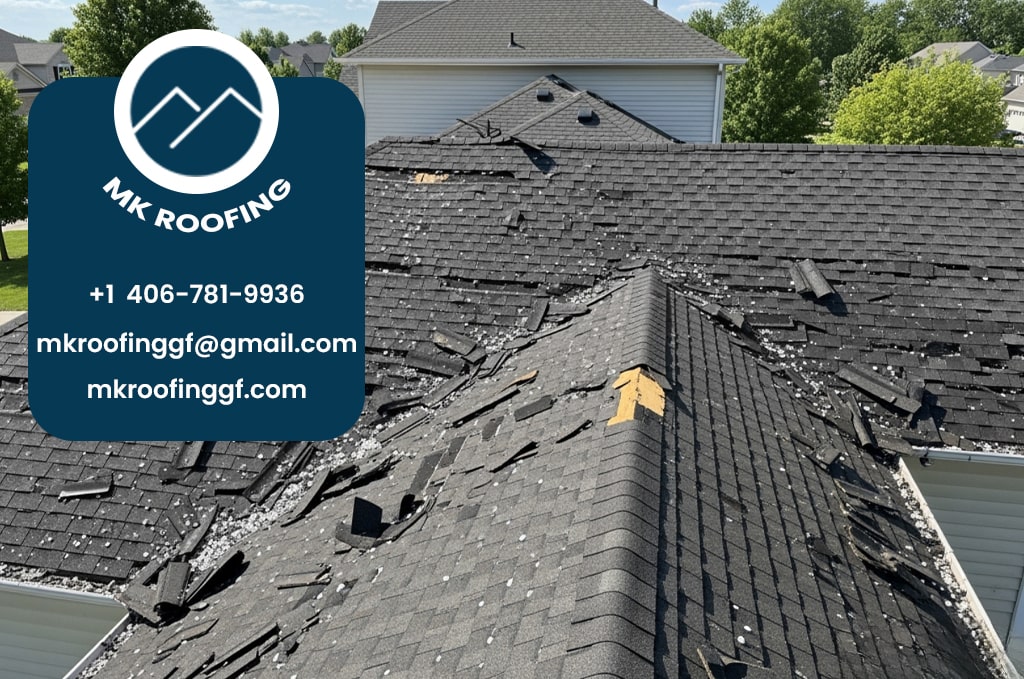
Montana weather can be unpredictable, and when a hailstorm hits Great Falls or Lewistown, your roof takes the brunt of the damage. While a roof is designed to be tough, hail can cause significant, often hidden, issues that compromise the durability of your home or business.
At MK Roofing, we are dedicated to providing high-quality roofing solutions and ensuring your property remains durable and weather-resistant. Here’s a step-by-step guide on what you should do immediately after a hailstorm to protect your investment.
Step 1: Prioritize Safety and Initial Assessment
The first thing to do after a hailstorm is to ensure your safety. The excitement of inspecting the damage might tempt you to climb onto your roof immediately. However, you must wait until you’re certain that it is safe to do so.
Safety First: Assessing Your Property From the Ground
1. Stay Grounded
Your safety comes first, so avoid getting on the roof immediately after a storm. Large hail can sometimes leave behind hazards such as fallen branches or debris, which could cause injury. Wait until the weather has calmed down completely before performing any visual inspections.
2. Use Binoculars for a First Look
From a safe distance, use binoculars to look for obvious signs of damage on your roof. Look out for:
- Dented gutters or vents: Check the gutters, which may have been impacted by hail. Dents in your gutters or exhaust vents are signs that the hail was large enough to cause damage.
- Missing or cracked shingles: These are the most common visible signs of damage, as hail can dislodge or crack shingles.
- Granules from asphalt shingles: Look for granules that may have been knocked off your shingles during the storm. These granules often end up in your gutters or collected on the ground.
3. Check for Leaks Inside the Home
Water damage from a leaking roof is the last thing you want. As soon as it’s safe, go inside and check the ceilings and walls for water spots. This is a sign that the roof may have been compromised and water has seeped through the surface. If water is dripping, it could indicate a serious breach in the roof.
Step 2: Contact a Local Roofing Expert for a Professional Inspection
Hail damage is not always visible to the untrained eye. What may look like a minor impact could be a subtle compromise that leads to future leaks, especially with Asphalt Shingles, where the granules are knocked off, exposing the matting to UV rays and other external elements.
Why a Professional Inspection Matters
After an initial visual inspection, it’s essential to contact a professional roofing expert to conduct a thorough evaluation. Here’s why:
- Expert Assessment: An experienced contractor knows where to look for subtle signs of hail damage, including less obvious spots that may not be visible from the ground.
- Structural Integrity: It’s not just about the shingles. Hail can compromise the structural integrity of your roof, leading to bigger issues later on, like leaks or roof sagging.
- Long-Term Solutions: A professional inspection provides an understanding of your roof’s overall condition, enabling you to make informed decisions about repairs or replacements.
At MK Roofing, we offer comprehensive Roof Inspection Services in Montana. Our team is highly trained in identifying the subtle signs of hail damage and providing a clear assessment.
Step 3: Document the Damage for Insurance Claims
If damage is confirmed, thorough documentation is crucial for a successful insurance claim. Many homeowners may not realize the importance of documenting the damage, but the more detailed your records are, the more likely you are to receive the compensation you need for repairs.
How to Document the Damage
1. Take Photos
Capturing clear, detailed photos of any visible damage is essential for filing an insurance claim. Here’s what you should focus on:
- Close-up photos of visible damage: Take shots of cracked, missing, or dented shingles, as well as any other affected areas, like gutters or vents.
- Wide-angle shots of your roof: Include wide-angle photos that show the entire roof to help your insurance company understand the extent of the damage.
- Affected Areas of Your Home: It’s not just your roof that could be damaged. Check other areas, like windows, siding, or decks, that may have also been affected by the storm. Document any damage to these areas.
2. Keep Records
Keep a written record of the storm’s date and the details of your insurance policy. This will help you stay organized when filing your claim. Also, record any communication with your insurance company or contractor, as these may be helpful later in the process.
3. Emergency Tarps (If Needed)
If your roof has severe damage, such as exposed sections, your contractor may advise using emergency tarping. Tarps are temporary solutions that can help prevent further water damage while the insurance claim process is underway.
For assistance with your insurance claim, check out our Roof Repair Services in Montana.
Step 4: Choose the Right Repair Solution
After documenting the damage and filing your claim, the next step is to choose the right repair solution for your roof. Depending on the extent of the damage, you may require anything from minor roof repairs to a full re-roofing or new roof installation.
Roofing Solutions We Offer
At MK Roofing, we provide durable solutions using high-quality materials. Here’s an overview of the types of roofs we handle and the services we provide:
-
Asphalt Shingles
Asphalt shingles are the most commonly used roofing material, especially in Montana. After a hailstorm, it’s important to check for granule loss and shingle integrity. Granule loss exposes the shingles to UV rays, shortening their lifespan. Our team offers reliable Residential Roofing Services in Montana for asphalt roof repairs.
-
Metal Roofing
Metal roofing is highly durable but can be prone to cosmetic or structural denting from hail. These dents don’t always affect the roofing’s functionality, but they need to be repaired to maintain the roof’s longevity and warranty. Whether you have standing seam metal roofs or corrugated metal roofs, we can help with efficient repairs. Our Commercial Roofing Services in Montana include metal roof repairs and installations.
-
Tile and Slate Roofs
Tile and slate roofs are popular due to their aesthetic appeal and durability. However, hail can crack tiles and cause issues. Repairing or replacing cracked tiles is crucial to maintaining the roof’s ability to protect your home from the elements. We specialize in both New Roof Installations and Re-Roof Services.
Step 5: Roof Maintenance to Prevent Future Damage
Once your roof is repaired or replaced, it’s important to consider ongoing maintenance to prevent future damage, especially from hailstorms. Preventive maintenance can significantly extend the life of your roof and ensure it continues to perform at its best.
Regular Roof Inspections
Scheduling regular roof inspections is key to identifying issues early before they become more serious. Routine inspections after heavy storms can help spot damage caused by hail, wind, or other weather elements.
Schedule your next Roof Inspection in Montana with MK Roofing.
Invest in Durable Roofing Materials
To minimize future hail damage, consider investing in impact-resistant roofing materials. While no roof is completely immune to damage, certain materials, like metal roofing or special asphalt shingles designed for impact resistance, can provide extra protection.
Our New Roof Installations in Montana feature the latest materials designed to withstand severe weather.
Ready to Protect Your Investment?
Don’t wait until a small issue becomes a costly problem. If your property in Great Falls, Montana, or Lewistown, Montana, has been hit by a hailstorm, call us today. At MK Roofing, we are dedicated to providing high-quality roofing solutions. Whether you need roof repairs, re-roofing, or a new roof installation, we’ve got you covered.
MK Roofing Services:
- Residential Roofing
- Commercial Roofing
- New Roof Installation
- Roof Inspection
- Roof Repairs
- Re-Roof Services
Contact Information:
Call Us at: 406-781-9936
Email: mkroofinggf@gmail.com
Follow us on Facebook
Visit our Google My Business Profile for more information.
FAQs
Q1: How can I tell if my roof was damaged by a hailstorm?
Look for signs like cracked, missing, or damaged shingles, dents on metal roofs, and granules from asphalt shingles in the gutters. Also, check for water damage inside your home.
Q2: Do I need a professional inspection after a hailstorm?
Yes. A professional roofing contractor can identify hidden damage that could lead to future leaks or structural issues, which may not be visible to the untrained eye.
Q3: What should I do if my roof has a major leak after a hailstorm?
Immediately call a roofing professional to conduct an emergency repair. Temporary measures like tarping the affected area can help reduce water damage until repairs are made.
Q4: Can I file an insurance claim for hail damage?
Yes, if you have insurance that covers roof damage. Document the damage with photos, and work with your contractor to file a claim.
Q5: How often should I inspect my roof for damage?
Regular inspections are recommended after every major storm, and at least once a year for general maintenance to ensure there are no hidden issues.